


7 Mistakes You're Making with Your Welding Fume Extraction System (and How to Fix Them)
Maintaining high air quality in a welding shop is not just a matter of comfort; it is a critical requirement for OSHA compliance and employee health. A welding fume extractor is an engineered solution designed to capture hazardous particulates like manganese, hexavalent chromium, and lead before they reach a worker’s breathing zone.
However, simply having a system installed does not guarantee safety. In many facilities throughout Western Canada and the Piedmont-Triad, performance often degrades over time due to operational errors and maintenance oversights.
Here are seven common mistakes industrial shop managers make with their welding fume extraction systems and the technical steps required to fix them.
1. Incorrect Capture Arm Positioning
The most frequent operator-level mistake is failing to maintain the proper distance between the weld and the extraction hood. If the capture arm is too far away, the air velocity at the source drops below the level required to entrain the fume. Conversely, if it is too close, it can interfere with the shielding gas and compromise weld quality.
The Fix:
Ensure operators keep extraction arms approximately 12 to 18 inches from the weld pool. Ideally, the hood should be positioned above or slightly behind the weld to take advantage of the natural upward thermal plume of the smoke. For specialized applications like soldering, this distance typically needs to be reduced to 4 to 6 inches. Regular training sessions on proper hood placement are essential to maintain effective source capture.
2. Neglecting Filter Maintenance and Pressure Gauges
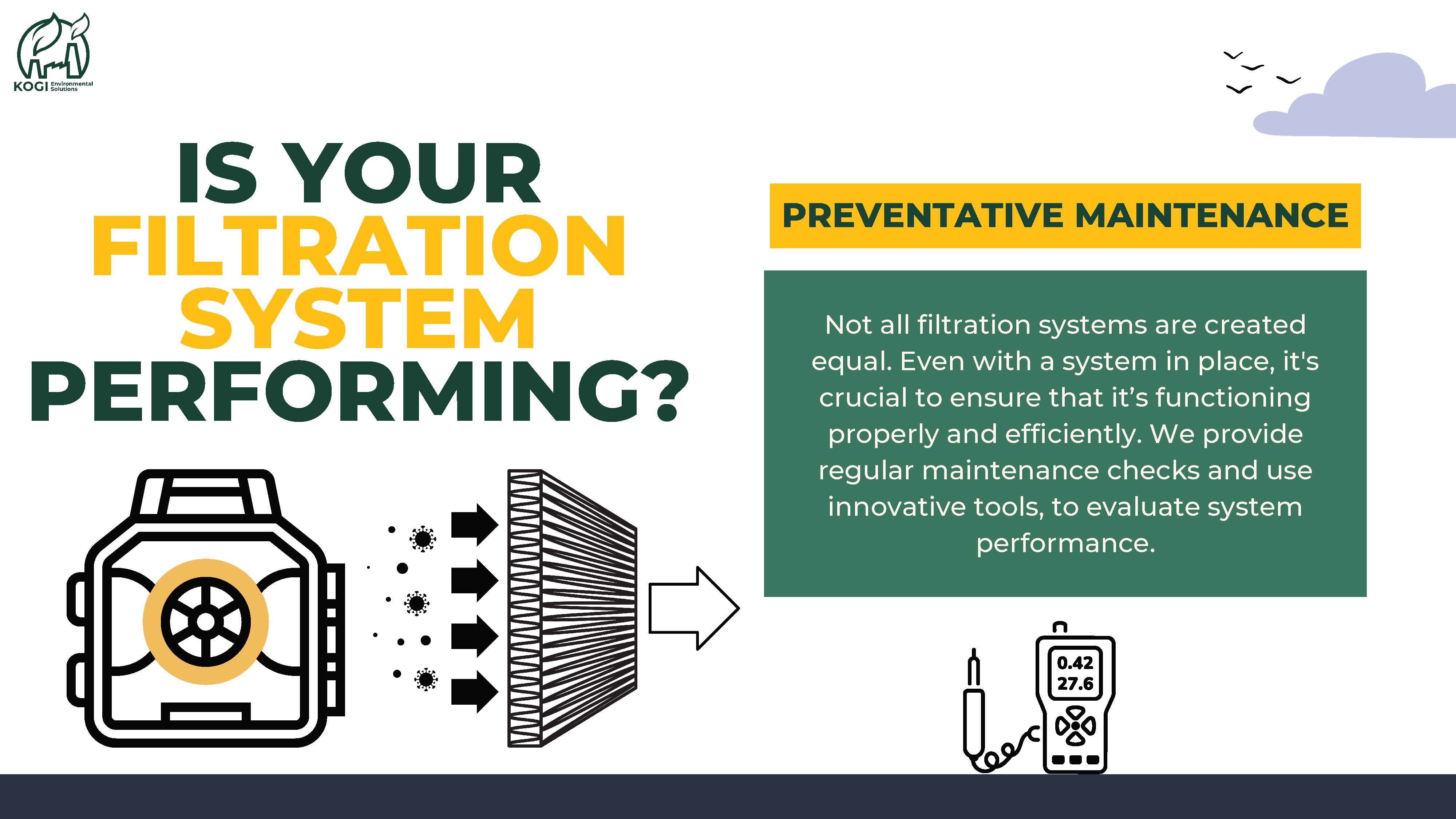
A welding fume extractor relies on a consistent pressure differential to pull air through its filters. As dust collector filters become saturated with fine metal particulates, the static pressure increases, and the airflow (CFM) decreases. Many shops run systems until they visibly stop working, which puts unnecessary stress on the fan motors and leaves workers exposed.
The Fix:
Establish a preventative maintenance schedule based on differential pressure readings. If your system is equipped with a Magnehelic gauge or a digital indicator, change your filters when the pressure reaches the manufacturer's recommended limit. At Kogi Environmental Solutions, our after-market replacement parts and BHA cartridge filters are designed to handle high-load industrial environments, ensuring your system maintains peak efficiency.
3. Allowing Dust Bins and Trays to Overflow
Forgetting to empty the collection tray is a simple mistake that can lead to a system-wide failure. When the dust bin is full, the pulse-cleaning cycle of the industrial dust collector cannot effectively shed dust from the filters. This causes "re-entrainment," where the dust is pulled back onto the filter media, quickly leading to a permanent clog.
The Fix:
Implement a daily or per-shift inspection of all dust boxes and trays. In high-volume shops, fine particulate accumulates faster than expected. Emptying these bins regularly is a low-cost way to extend the life of your expensive filter elements and prevent airflow restrictions.
4. Poor Duct Design and Leaking Joints
Industrial air pollution control systems are only as good as the ductwork that connects them. We frequently see shops using long horizontal runs, sharp 90-degree bends, or flexible hoses that are unnecessarily long and kinked. These design flaws create excessive friction and turbulence, which starves the system of suction.
The Fix:
Optimize your airflow by using high-quality industrial ductwork, such as Nordfab. Minimize the use of flexible hose and prioritize smooth, long-radius elbows. If you are unsure if your current layout is efficient, our customized design services can provide a 3D drawing of a recommended duct design to maximize your system’s performance.

5. Using the Wrong Filtration Media for the Metal
Not all welding fumes are created equal. Welding stainless steel produces hexavalent chromium, which has much stricter OSHA permissible exposure limits (PELs) than carbon steel. Using a standard cellulose filter when high-efficiency PTFE-coated filters are required is a major compliance risk.
The Fix:
Match your filter media to your specific process. For stainless steel or high-hazard materials, utilize HEPA or MERV 15/16 rated filters. If your process generates oily residues alongside smoke, an oil mist collector or a pre-filter stage may be necessary to prevent the main filter from blinding. If you are uncertain about your current air quality, our air quality monitoring services can help determine if you are within permissible levels.
6. Ignoring Cross-Drafts and Shop Airflow
Even the best-positioned capture arm can be rendered useless by a strong cross-draft. Open bay doors, floor fans, or HVAC supply vents can push the welding plume away from the extraction hood and into the general shop air.
The Fix:
Identify and mitigate drafts in the welding area. Use welding screens or curtains to create a localized environment where the extraction system can work without interference. Conduct a "smoke test" with a smoke pencil to visualize the airflow and ensure the welding fume extractor is actually winning the battle against the shop's ambient air currents.
7. Lack of OSHA Documentation and Training
OSHA 29 CFR 1910.252 regulates welding, cutting, and brazing, and they expect more than just the presence of a machine. If you cannot provide records of maintenance, filter changes, and airflow tests, you may be vulnerable during an inspection.

The Fix:
Maintain a comprehensive logbook for every extraction unit. Include the dates of filter replacements, any repairs performed by OEM certified technicians, and periodic airflow velocity checks. Keeping these records not only helps with OSHA compliance but also provides a clear history of equipment performance for future budgeting and upgrades.
Technical Maintenance Checklist for Shop Managers
To ensure your facility remains safe and efficient, follow this condensed maintenance schedule:
| Frequency | Task |
|---|---|
| Daily | Confirm capture arm positioning; check for hose kinks; empty dust trays. |
| Weekly | Inspect pre-filters; check seals and gaskets on access doors for leaks. |
| Monthly | Review differential pressure gauges; record airflow velocity at the hood. |
| Quarterly | Inspect full duct runs for accumulation; review operator training records. |
| Annually | Perform a full air quality audit; service fan motors and bearings. |

Engineered Solutions for Cleaner Air
Mistakes in welding fume extraction lead to more than just fines: they lead to long-term health issues for your workforce and decreased operational efficiency. At Kogi Environmental Solutions, we specialize in identifying these technical gaps and providing the equipment and services needed to close them.
Whether you need a new industrial dust collector, a site visit for fan balancing, or high-performance dust collector filters, our team is ready to help you maintain a safe, compliant workplace.
For a tailored recommendation or to schedule an air quality assessment, contact our offices in Greensboro, NC, or Edmonton, AB.