


7 Mistakes You're Making with Your Industrial Dust Collector (and How to Fix Them)
Industrial air filtration systems are critical components in manufacturing, metalworking, and woodworking facilities. They ensure OSHA compliance, protect sensitive machinery from particulate ingress, and maintain a safe environment for personnel. However, many facilities suffer from reduced suction, high energy costs, and frequent component failure due to common design and maintenance errors.
Optimizing an industrial dust collector requires a technical understanding of airflow dynamics, static pressure, and material properties. Below are seven of the most common mistakes found in industrial settings and the engineering-backed solutions to fix them.
1. Incorrect Duct Diameters and Airflow Velocity
Selecting duct sizes based on availability rather than calculated requirements is a frequent error that leads to system inefficiency. Duct diameter directly dictates the conveying velocity: the speed at which air must move to keep particles suspended in the airstream.
The Mistake:
If the ducting is too large, the air velocity drops, causing dust to settle and accumulate within the pipes. This creates a fire hazard and eventually leads to a complete system blockage. Conversely, if the ducting is too small, the static pressure increases significantly, forcing the fan to work harder, consuming more energy, and causing premature wear on the duct walls due to high-velocity abrasion.
The Fix:
Size your ducting based on the required Cubic Feet per Minute (CFM) for your specific application. For example, metal dust typically requires a minimum conveying velocity of 3,500 to 4,500 feet per minute (FPM). Maintain the collector's discharge diameter for as long as possible before reducing it to match equipment ports. Consulting Kogi Environmental Solutions products can provide technical specifications for matching ducting to your specific collector model.
2. Utilizing 90-Degree Straight Tees
In many "DIY" or poorly planned installations, standard 90-degree "T" joints are used to connect branch lines to the main duct run. This is a fundamental error in fluid dynamics.
The Mistake:
A straight tee creates a wall that the incoming air must hit before turning. This creates extreme turbulence and a massive drop in static pressure. These joints become primary sites for "drop-out," where dust loses velocity and settles, eventually clogging the branch.
The Fix:
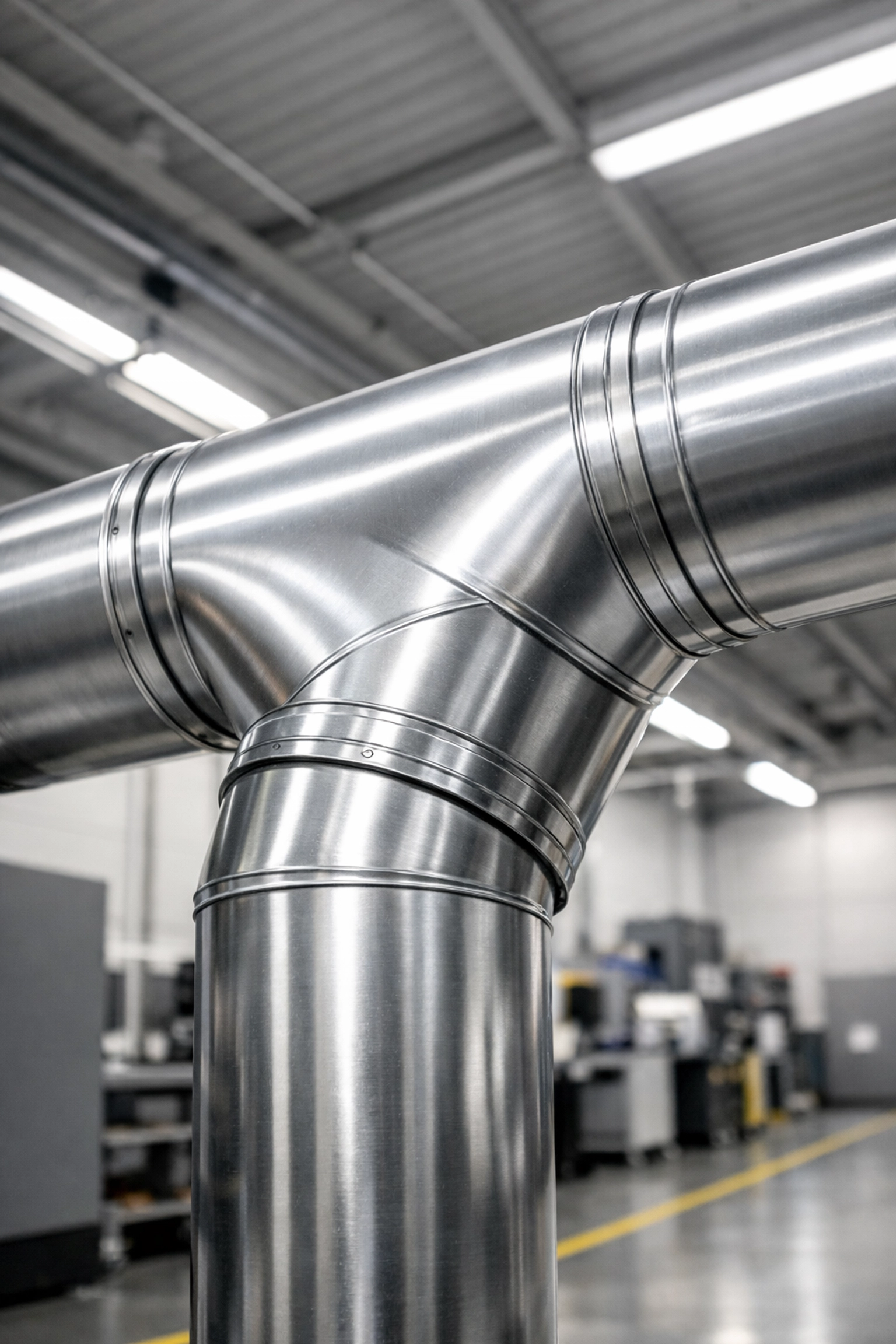
Replace 90-degree tees with lateral entries (Y-junctions) or 45-degree entries. Branch lines should enter the main duct at an angle of 30 to 45 degrees. This allows the branch airflow to merge smoothly with the main airflow, preserving momentum and reducing the load on the fan.
3. Excessive Use of Flexible Ducting
Flexible hose is often used to complete connections between rigid ducting and machinery because it is easy to install. However, its overuse is one of the most common causes of poor suction at the source.
The Mistake:
The internal ribbing of a flexible hose creates significant friction. On average, flexible ducting offers 3 to 10 times the resistance of rigid, smooth-walled steel ducting. A long run of flex hose acts as a "brake" on your system, drastically reducing the effective CFM at the tool or welding fume extractor.
The Fix:
Limit flexible hose to the absolute minimum required for machine movement: typically no more than 3 to 5 feet. Use rigid, rolled-lip steel ducting for all main runs and branch lines. Brands like Nordfab ducting provide clamp-together solutions that offer the ease of flex hose with the efficiency of rigid pipe.
4. Short Radius Elbows and Turbulent Airflow
When a duct run needs to change direction, the radius of the turn matters as much as the diameter of the pipe.
The Mistake:
Short radius elbows (where the turn is sharp) create high resistance and turbulence. Much like the straight tee, a sharp turn forces the dust-laden air to impact the outer wall of the elbow, causing friction, wear, and pressure loss.
The Fix:
Standardize on long-radius elbows, typically with a centerline radius of 1.5 times the duct diameter (1.5D). This ensures a smoother transition for the air and particles, maintaining the velocity necessary to reach the industrial dust collector filters without settling.
5. Inadequate "Runway" for Fittings
A common installation error is clustering dampers, bends, and reducers immediately next to the equipment intake or the collector inlet.
The Mistake:
Air requires space to achieve laminar (smooth) flow after passing through a transition or a tool hood. When fittings are placed too close together, the air remains turbulent, preventing it from efficiently accelerating the dust particles. This results in poor capture at the source, even if the fan is correctly sized.
The Fix:
Ensure a "runway" of straight ducting before and after any major fitting or transition. A general rule of thumb is to allow a straight run of at least 3 to 5 duct diameters before entering a fan or moving into a major direction change.
6. Neglecting Dust Collector Filters and Pulse Cleaning Systems
The heart of the system is the filter media. Many managers treat filters as a "set and forget" component until the system stops pulling air.
The Mistake:
Using the wrong type of dust collector filters for the material being collected (e.g., using standard cellulose for oily welding fumes) leads to "blinding," where particles become permanently embedded in the media. Additionally, many facilities fail to maintain their pulse-jet cleaning systems. If the compressed air dryer is failing, moisture and oil enter the pulse valves, causing the filters to cake and fail prematurely.
The Fix:
Monitor the differential pressure gauge on your collector. A sudden rise in pressure indicates blinded filters or a failed cleaning cycle. Ensure your compressed air supply is clean and dry. For high-efficiency needs, consider Parker Hannifin or Glasfloss filters that match the specific micron size and chemistry of your dust.

7. Improper Material Selection and Explosion Risk
In industrial environments handling combustible dusts (such as aluminum, wood, or certain plastics), the ducting material and system grounding are matters of life safety.
The Mistake:
Using PVC or non-conductive plastic piping for industrial dust collection is a major violation of NFPA standards. Plastic creates static electricity as dust rubs against the walls. Without proper grounding, this static can discharge as a spark, igniting the dust cloud inside the duct and causing a catastrophic explosion.
The Fix:
Always use metal ducting: typically galvanized or stainless steel: and ensure the entire system is electrically bonded and grounded. For applications involving oils or mist, ensuring the ducting is liquid-tight is equally important. In these cases, an oil mist collector or an electrostatic precipitator may be more appropriate than a standard baghouse or cartridge collector.
Bonus: Overflowing Collection Drums
It is a simple oversight that causes massive mechanical failure: allowing the waste drum to overfill.
The Mistake:
When a collection drum or hopper fills to the top, the dust has nowhere to go but back up into the filter cabinet. This "slugs" the filters with an overwhelming amount of material, often bending filter cages, tearing media, and necessitating a complete (and expensive) filter change-out.
The Fix:
Implement a strict maintenance schedule to empty drums when they are 70% full. For high-volume operations, install rotary airlocks or automated level sensors that alert maintenance personnel when a drum change is required.
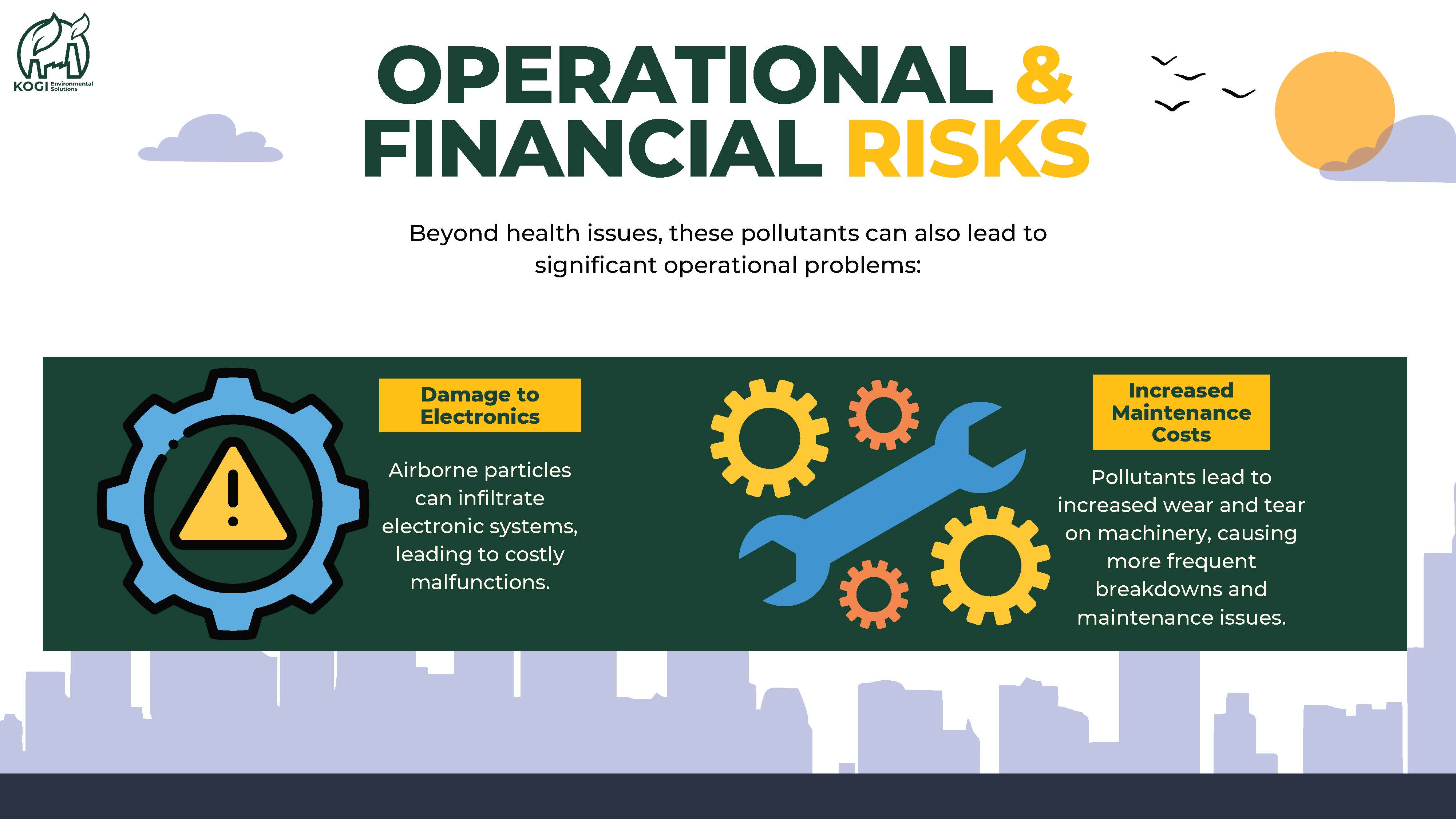
Technical Summary and Next Steps
Correcting these seven mistakes will significantly improve the air quality in your facility, reduce your energy consumption, and extend the lifespan of your filtration equipment. Whether you are operating a welding fume extractor in a small shop or a multi-thousand CFM central system in a heavy manufacturing plant, the principles of airflow remain the same.
If your system is experiencing low suction, excessive noise, or frequent filter clogging, a professional air quality audit is the most effective way to identify the root cause. Kogi Environmental Solutions specializes in engineered air movement and filtration systems designed to meet OSHA and NFPA standards.
For technical assistance with ducting design, filter selection, or system optimization, you can contact our engineering team or explore our literature library for detailed product specifications and manuals. Proper air filtration is not just a compliance requirement; it is an investment in your facility's operational efficiency and the health of your workforce.