


Industrial Dust Collector Maintenance - Avoiding Common Operational Pitfalls
Maintaining an industrial dust collector is a critical requirement for manufacturing facilities seeking to ensure employee safety and meet stringent OSHA compliance standards. When process air: air containing particulate matter, fumes, or smoke: is not properly managed, the risks extend beyond equipment degradation to include serious health hazards and combustible dust explosions.
Despite the importance of these systems, many facilities fall into routine maintenance pitfalls that compromise the efficiency of their dust collectors. This technical guide outlines the primary maintenance errors identified in industrial environments and provides engineered solutions for maintaining peak performance and regulatory compliance.
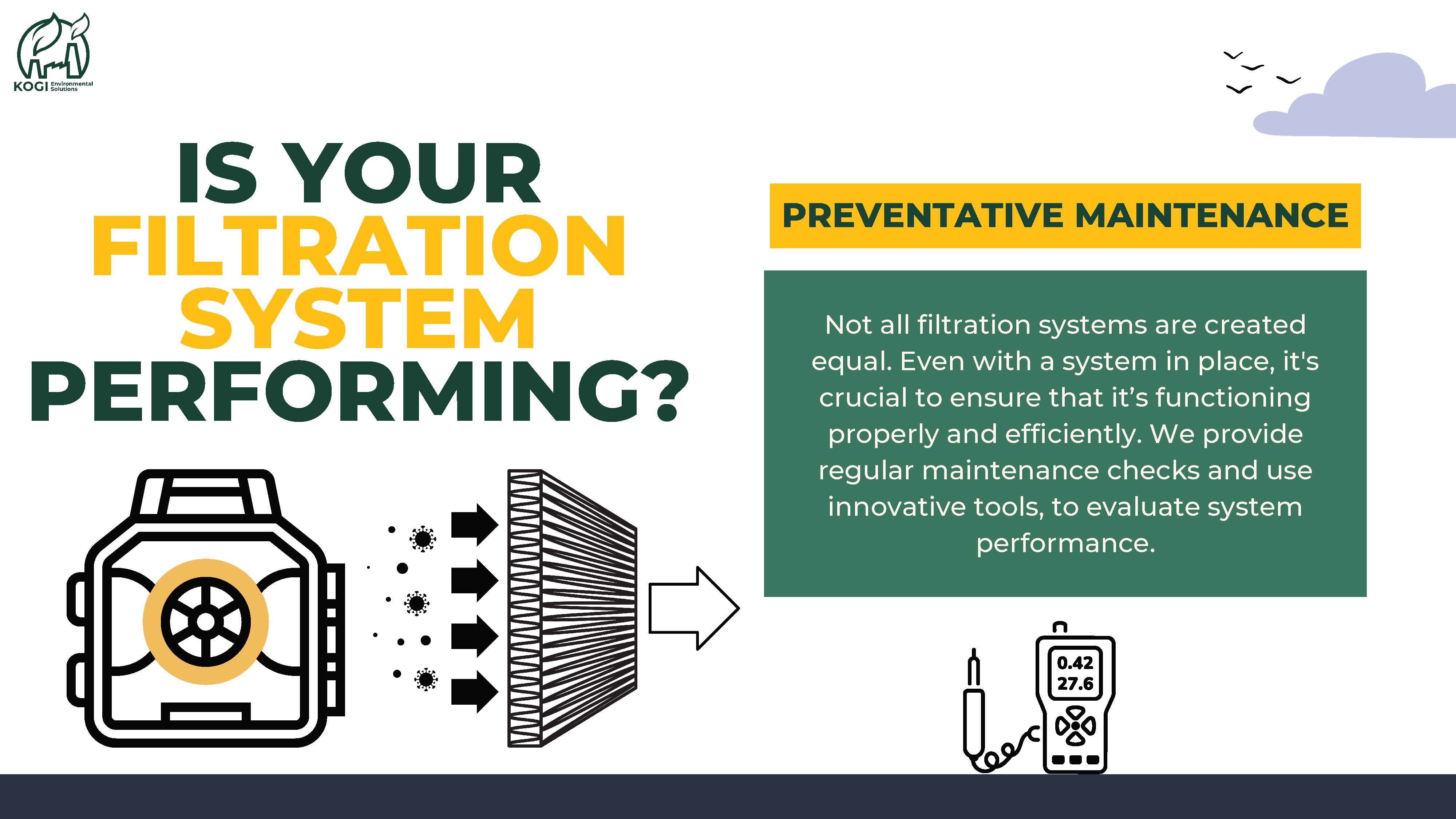
Monitoring Differential Pressure - The Primary Metric for Filter Health
The differential pressure (ΔP) across dust collector filters is the most reliable indicator of system performance. It measures the resistance to airflow as air passes through the filter media.
Pitfall: Neglecting the ΔP Gauge
Many operators overlook the differential pressure gauge or fail to act when readings deviate from the design baseline. A high ΔP reading (typically exceeding 5.0 to 6.0 inches of water gauge, depending on the model) indicates that the filters are "blinded" or overloaded.
When resistance increases, the system’s ability to capture dust at the source is diminished. This results in reduced capture velocity at the hoods, allowing hazardous particulate to escape into the facility. Conversely, a sudden drop in pressure often indicates a torn filter or a failed seal, which leads to visible emissions and potential OSHA violations under 29 CFR 1910.1000.
Technical Recommendation: Install digital differential pressure transmitters that can alert maintenance personnel via the plant’s control system. Regularly calibrate manual Magnehelic gauges to ensure accuracy.

Pulse-Jet System Failures - Analyzing Compressed Air Quality
Modern industrial dust collectors often utilize pulse-jet cleaning systems to dislodge the "dust cake" from filter cartridges or bags. This process is essential for extending the life of BHA filters and maintaining steady airflow.
Pitfall: Inadequate Compressed Air Maintenance
The efficacy of the cleaning pulse depends on the quality and volume of the compressed air supplied to the collector. Common failures include:
- Moisture and Oil Contamination: If the compressed air is not properly dried and filtered, oil and water can reach the filter media. This causes the dust to "mud" on the surface, making it impossible for the pulse to remove the particulate.
- Worn Diaphragm and Solenoid Valves: These components are mechanical and have a finite cycle life. A stuck valve will either bleed compressed air continuously (wasting energy) or fail to fire entirely, leading to localized filter blinding.
- Incorrect Pulse Timing: Over-pulsing can wear out filters prematurely by forcing particulate into the substrate of the media, a phenomenon known as "depth loading."
Technical Recommendation: Ensure the facility's air compressors and dryers are operating within specifications. Inspect diaphragm valves annually and verify that the pulse-jet manifold pressure remains consistent across all cycles.

Hopper Management - The Risk of Using Hoppers for Storage
A dust collector's hopper is designed as a transitional funnel to guide captured particulate into a secondary container, such as a drum or a rotary airlock.
Pitfall: Using Hoppers as Storage Vessels
One of the most frequent operational errors is allowing the hopper to fill up. When dust accumulates in the hopper, it can "bridge" across the discharge opening or back up into the filter section. Once the dust reaches the filters, it disrupts the cleaning cycle and can lead to immediate filter failure.
In facilities handling combustible dust, an overfilled hopper significantly increases the fuel load within the collector. According to NFPA 652, proper housekeeping and material evacuation are essential for mitigating explosion risks.
Technical Recommendation: Integrate high-level sensors in the hopper to trigger an alarm or shut down the process if dust levels exceed safety limits. Use rotary airlocks to ensure a continuous and airtight discharge of material.
Ductwork Integrity - Maintaining Transport Velocities
The ducting connecting the process points to the industrial dust collector must be engineered for specific transport velocities to prevent dust from settling within the pipes.
Pitfall: Inadequate Duct Inspection
If the airflow velocity drops below the required transport speed (generally 3,500 to 4,500 feet per minute for industrial dusts), particulate will settle in the horizontal runs of the ductwork. This accumulation increases system resistance, further reducing airflow and creating a severe fire hazard.
NFPA standards (specifically NFPA 654) require that ductwork be inspected regularly for accumulation. Ignoring this can lead to catastrophic secondary explosions if a primary event in the collector sends a shockwave through the ducts, lofting the settled dust into the air.
Technical Recommendation: Perform annual duct inspections and utilize customized design services to ensure that any modifications to the production line do not compromise the system’s transport velocity.
Explosion Isolation and OSHA Compliance - Managing the Risks
For many industrial sectors, the dust collected is combustible. Maintaining the hardware of the collector is only one part of a comprehensive safety strategy; the other is ensuring that the system is equipped with functional explosion-isolation components.
Pitfall: Neglecting Isolation Devices and Documentation
Many facilities operate legacy equipment that lacks modern explosion vents or chemical suppression systems. Furthermore, even when these systems are present, they are often neglected. Worn wipers on rotary airlocks, for instance, can prevent the device from acting as a flame front barrier during an explosion.
OSHA compliance requires that facilities conduct a Dust Hazard Analysis (DHA) to identify these risks. Operating a system that does not meet current NFPA standards for explosion protection exposes the company to significant liability and safety risks.
Technical Recommendation: Schedule regular air quality monitoring and compliance assessments. Ensure that all explosion protection devices are inspected and certified according to the manufacturer’s intervals.

Engineered Solutions for Industrial Air Quality
Avoiding the common pitfalls of industrial dust collector maintenance requires a structured, data-driven approach. By monitoring differential pressure, ensuring compressed air quality, and managing material discharge, facilities can significantly reduce downtime and enhance workplace safety.
Kogi Environmental Solutions provides a comprehensive suite of services, from installation services to the supply of high-performance after-market replacement parts. Our OEM certified technicians are equipped to perform detailed inspections and repairs, ensuring your equipment remains in compliance with OSHA and EPA regulations.
For facilities seeking to optimize their air pollution control systems or those requiring a tailored maintenance program, contact our specialists to discuss a customized design service or site visit.